
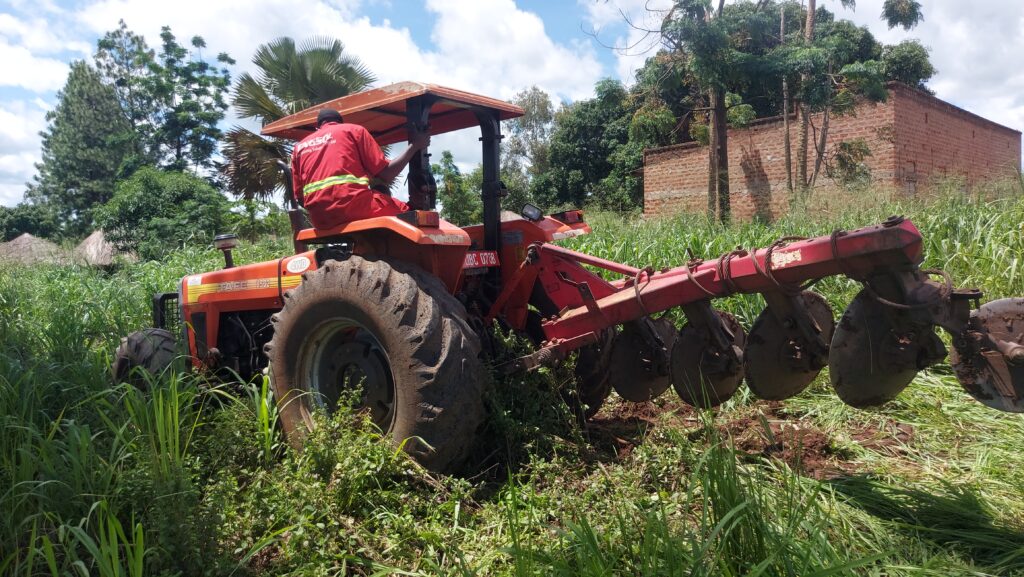
Tractor mechanization plays a crucial role in modern agriculture and has numerous important benefits. Here are several key reasons highlighting the importance of tractor mechanization:
- Increased productivity: Tractors are powerful machines capable of performing a wide range of agricultural tasks efficiently. They enable farmers to complete tasks such as plowing, tilling, planting, harvesting, and transportation more quickly and on a larger scale. This increased productivity helps farmers maximize their yields and meet growing food demands.
- Time and labor savings: Tractors significantly reduce the time and labor required for various farming operations. With their mechanized capabilities, tasks that used to take days or weeks can now be completed in hours. Farmers can accomplish more in less time, allowing them to allocate their resources and labor to other critical activities on the farm.
- Precision and accuracy: Tractors equipped with modern technology and implements offer precise and accurate operations. They can provide uniformity in tasks like seeding, fertilizing, and spraying, ensuring optimal distribution and reducing waste. Precision farming techniques made possible by tractors, such as GPS-guided systems, allow farmers to make data-driven decisions and apply inputs more efficiently.
- Cost reduction: Tractor mechanization helps reduce labor costs associated with manual farming methods. Instead of relying on large numbers of farm workers for labor-intensive tasks, farmers can utilize tractors and accomplish the same tasks with fewer workers. Additionally, tractors can enhance fuel efficiency, reduce the need for multiple machines, and optimize the use of inputs, leading to cost savings in the long run.
- Versatility and adaptability: Tractors can be equipped with various attachments and implements, making them versatile machines capable of performing multiple tasks. They can be used for plowing, harrowing, planting, spraying, harvesting, and even non-agricultural activities like construction and transportation. The ability to adapt to different operations makes tractors valuable assets for farmers, allowing them to diversify their activities and increase income streams.
- Sustainable agriculture: Tractor mechanization can contribute to sustainable farming practices. Modern tractors often come with eco-friendly features, such as improved fuel efficiency, reduced emissions, and the ability to integrate precision farming techniques. By minimizing waste, optimizing resource utilization, and promoting efficient practices, tractors can help farmers adopt more sustainable agricultural methods.
- Capacity building and rural development: The adoption of tractor mechanization in rural areas can contribute to rural development by creating employment opportunities, skill development, and technology transfer. Tractor mechanics and operators are in demand, providing livelihood opportunities for individuals in rural communities. Furthermore, access to tractors can empower small-scale farmers, enabling them to improve their productivity, income, and overall standard of living.
Overall, tractor mechanization is of utmost importance in modern agriculture due to its ability to increase productivity, save time and labor, provide precision and accuracy, reduce costs, offer versatility, promote sustainable practices, and contribute to rural development. It is a key factor in meeting the global demand for food, improving farm efficiency, and ensuring sustainable agricultural practices for the future.