
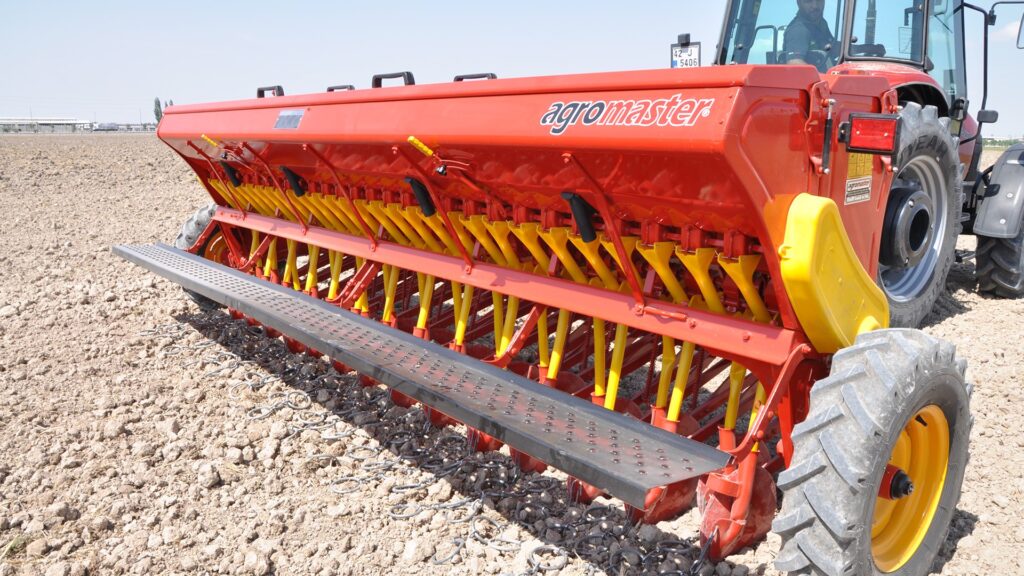
A seed drill is a piece of agricultural equipment designed to efficiently plant seeds in rows at a consistent depth and spacing. While seed drills can be useful for planting a variety of crops, including rice, their suitability for rice planting depends on a few factors.
Rice cultivation has unique requirements due to its growth in waterlogged fields called paddies. Traditional rice planting methods involve broadcasting seeds by hand or using specialized equipment like a mechanical rice transplanter for paddy fields.
Here are some considerations regarding using a seed drill for rice planting:
- Waterlogged Fields: Rice fields are typically flooded with water during planting. This waterlogged environment might not be conducive to the functioning of a standard seed drill, as it can become clogged with mud and water.
- Depth and Spacing: Seed drills are designed to plant seeds at a certain depth and spacing, which might not align with the specific requirements of rice planting. Rice seeds need to be planted at a specific depth and spacing that vary depending on factors like the rice variety and local conditions.
- Paddy Configuration: Rice paddies often have irregular shapes due to the bunds or dikes that hold water. Seed drills are better suited for planting in straight rows, which might not align with the layout of traditional rice fields.
- Seed Type: The size and shape of rice seeds might not be compatible with the mechanisms of a typical seed drill, potentially leading to issues with seed metering and placement.
- Residue Management: In conventional rice cultivation, rice straw or residues from the previous crop are left in the field to decompose, providing nutrients and helping to manage soil moisture. Seed drills might have difficulties planting seeds in fields with heavy residues.